Commercial Roll-Up Door Installation for a Busy Warehouse
Warehouses run on efficiency. When your access points aren't working for you, they're working against you - slowing down operations, creating bottlenecks, and adding friction to an already demanding workflow. That's exactly the kind of problem a quality commercial door installation fixes.
We recently wrapped up a commercial roll-up door installation for a warehouse space that needed a serious upgrade in access. The space itself is still mid-build, which actually makes this the perfect time to get the door in - before equipment and inventory take over the floor. Getting the door set early means the rest of the buildout can move around it, rather than trying to retrofit later.
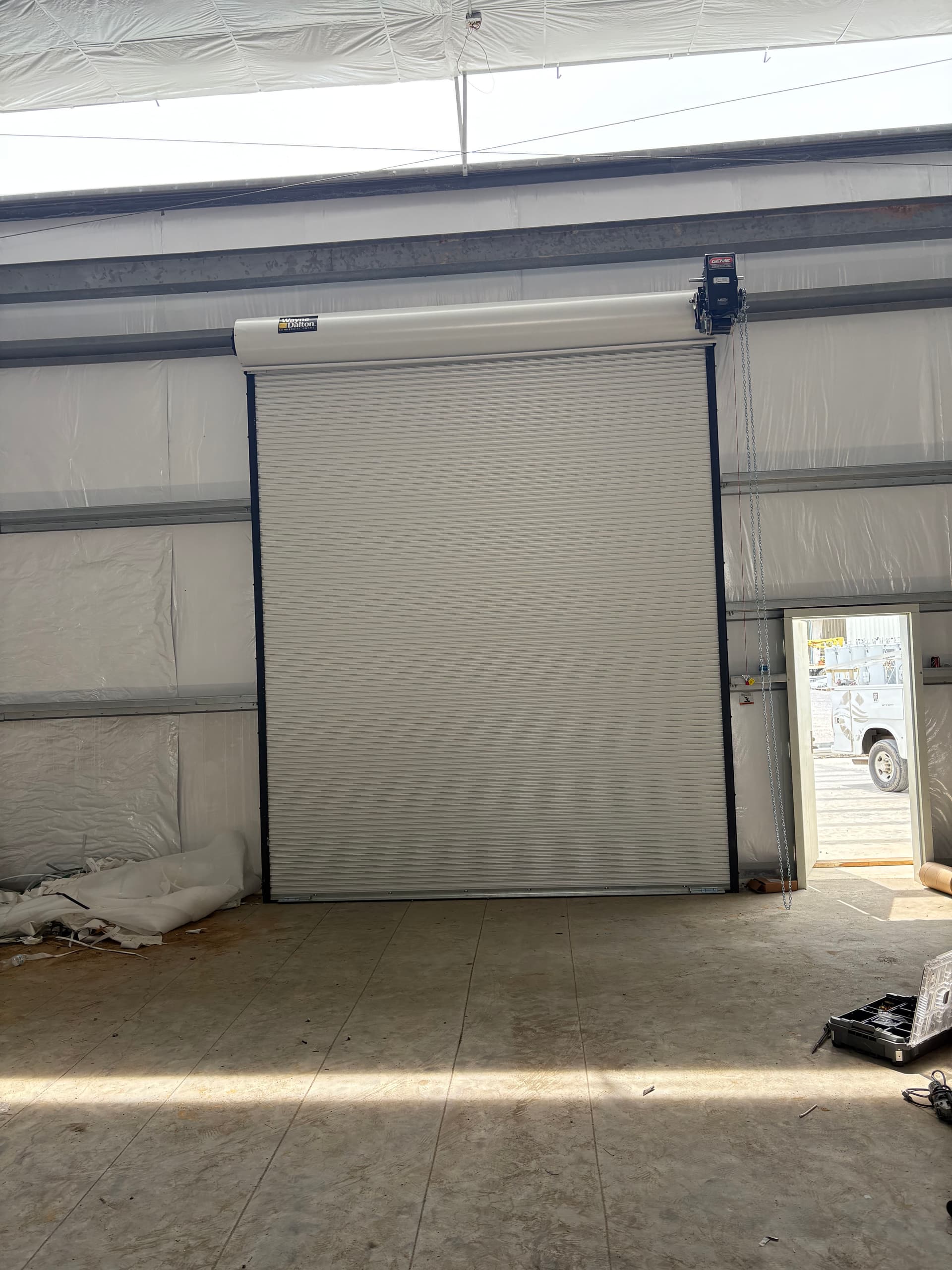
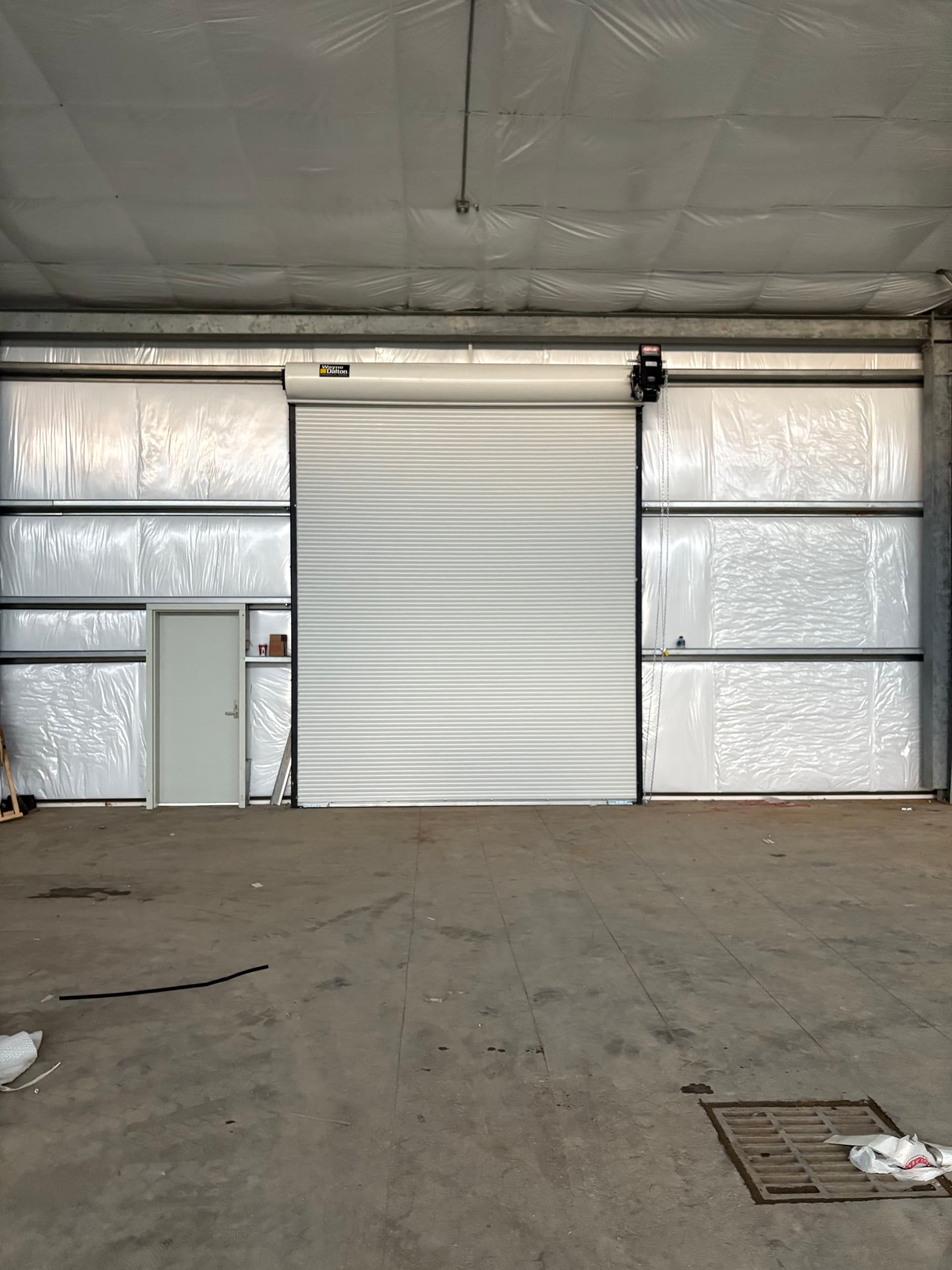
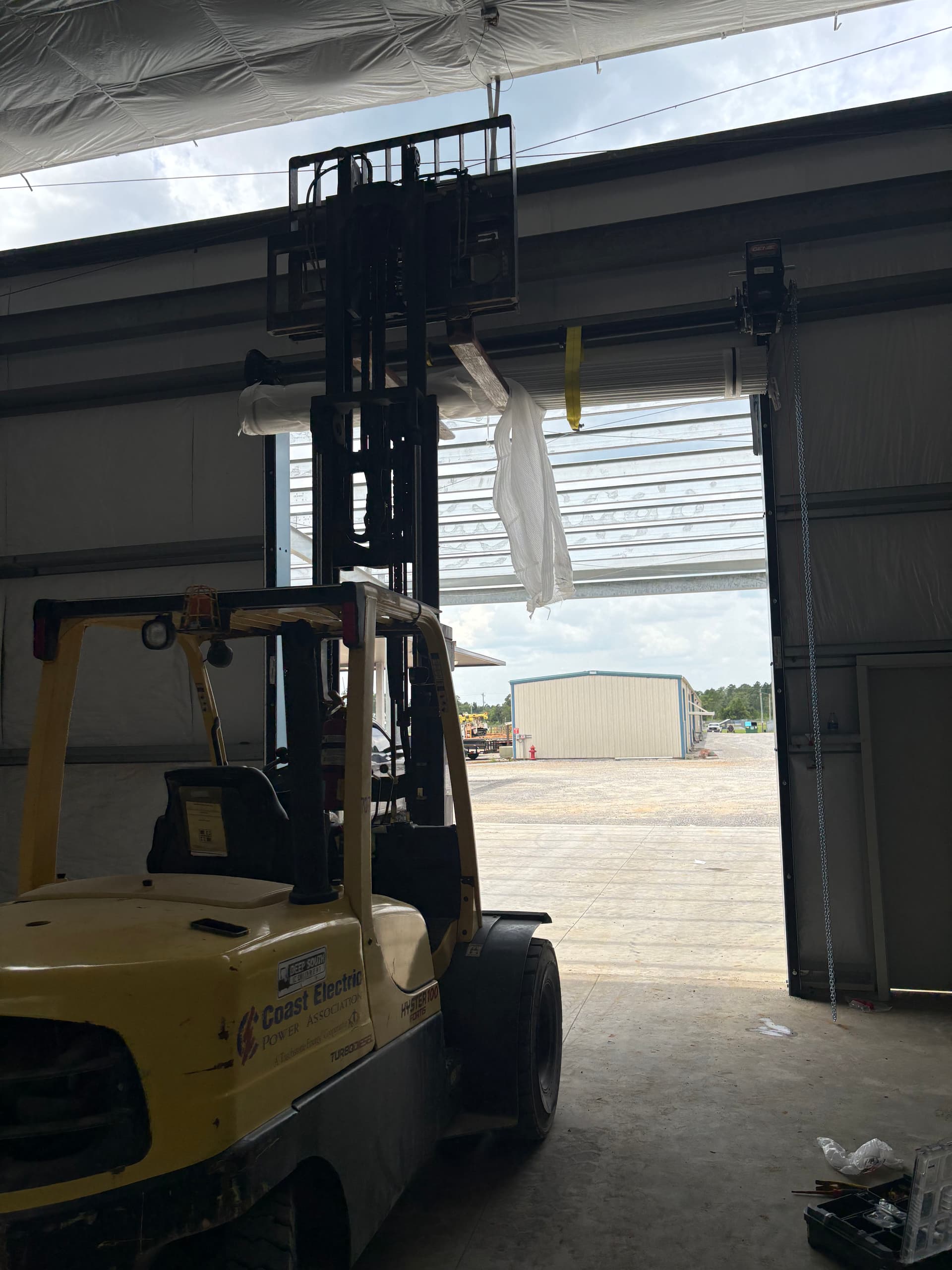
Roll-up doors are the go-to choice for commercial and industrial spaces for good reason. They take up virtually no swing space, they hold up under heavy daily use, and they open fast - which matters when you've got forklifts and freight moving in and out constantly. You can see from the install that the opening is sized to accommodate large equipment with room to work. That kind of clearance isn't an accident. It's planned.
The motor unit is mounted clean and tight at the header, with the chain operator positioned on the side for easy manual operation when needed. That's a detail worth paying attention to - in a working warehouse, you want simple, accessible operation. Nothing fancy, nothing fussy. Just a door that opens when you need it to and stays closed when you don't.
Commercial garage door installation is a different animal from residential work. The doors are heavier, the hardware requirements are more demanding, and the margin for error is smaller. We've done enough of these to know where things can go sideways - and how to make sure they don't.